What Makes Business Aviation Cabin Crew Recruitment Different from Airline Recruitment
Business aviation cabin crew recruitment is fundamentally different from airline recruitment. Airlines hire for large, standardized fleets with predictable routes and mass‑market passengers. Business aviation hires for small, unique operations where cabin crew are often the only staff a client sees and must blend safety, service, and flexibility for ultra‑high‑net‑worth individuals.
Recruiting in business aviation requires a more personalized, safety‑focused, and client‑aligned approach. This guide explains the key differences, using the same short‑bullet‑point style you have been using.
1. Client Profile and Expectations
The passenger profile is the biggest difference.
Airlines
- Serve mass‑market passengers with standardized service.
- Expectations are consistent and predictable.
- Interaction is limited to the flight duration.
- Service follows airline‑wide brand standards.
Business Aviation
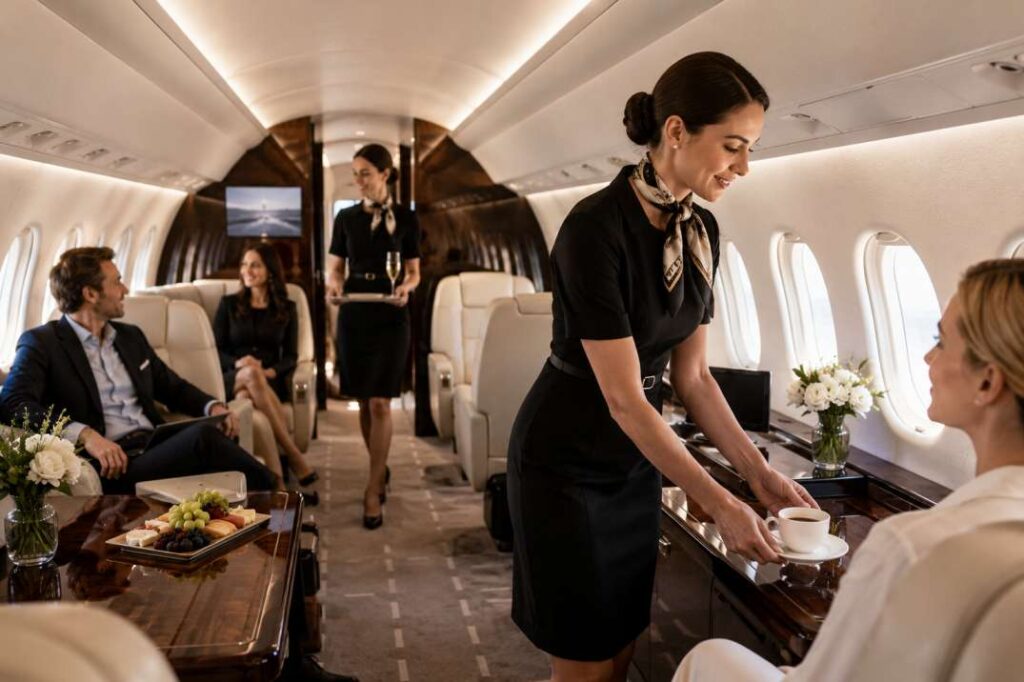
- Serves ultra‑high‑net‑worth individuals, corporate executives, and VIPs.
- Expectations are highly personalized and discretionary.
- Crew often build long‑term relationships with the same passengers.
- Service must match the owner’s lifestyle and privacy standards.
2. Safety vs. Service Balance
Both sectors require safety, but business aviation emphasizes it differently.
Airlines
- Safety is standardized and highly regulated.
- Service is secondary to safety and efficiency.
- Safety procedures are rigid and uniform.
Business Aviation
- Safety must be equally strong but often less visible.
- The crew must balance high‑end service with safety oversight.
- Service is not just hospitality; it is part of the owner’s trust in the operator.
- Safety‑trained crew are often preferred over pure hospitality staff.
3. Crew Size and Solo Operations
The operational environment is different.
Airlines
- Large cabin teams with dozens of crew per aircraft type.
- The crew always work with colleagues.
- Roles are clearly divided.
Business Aviation
- Small teams, often 1–2 cabin crew per flight.
- Crew may fly solo or with unfamiliar pilots.
- Must handle all duties alone: safety, service, catering, and cleaning.
- Comfort working solo is essential.
4. Schedule Flexibility and On‑Call Work
Scheduling is a core difference.
Airlines
- Predictable rosters with fixed routes and layovers.
- Changes are managed through the airline’s system.
- Hours are structured and often unionized.
Business Aviation
- Highly variable, often last‑minute schedules.
- The crew must be on‑call 24/7 for short‑notice trips.
- Trips can change destinations, times, or durations at any moment.
- Flexibility is a core requirement, not an extra.
5. Service Standards and Hospitality Skills
Service expectations differ significantly.
Airlines
- Service follows standardized menus and procedures.
- Focus is on efficiency and consistency.
- Catering is pre‑packaged or pre‑plated.
Business Aviation
- Service is bespoke: multi‑course meals, fine wines, and special requests.
- Crew often plan catering, shop for ingredients, and plate meals.
- Must handle unusual requests, dietary needs, and special events.
- Culinary and luxury‑hospitality experience is a major advantage.
6. Discretion and Confidentiality
Privacy is a non‑negotiable standard in business aviation.
Airlines
- Discretion is expected but not at the same level.
- Passengers are strangers; confidentiality is less critical.
Business Aviation
- Confidentiality is non‑negotiable.
- Crew must protect owner and passenger privacy.
- No social‑media posts about trips, clients, or locations.
- Must understand non‑disclosure and security protocols.
A breach of privacy in business aviation can end careers and damage operator reputation.
7. Training and Qualifications
Training requirements differ in focus and depth.
Airlines
- Training is standardized and airline‑specific.
- Focus is on safety, emergency procedures, and service.
Business Aviation
- Safety training is critical but often less codified in regulation.
- Crew must be trained for the specific aircraft type and owner’s SOPs.
- Luxury‑hospitality and VIP‑protocol training is often required.
- Safety + service + discretion is the expected combination.
Many operators now expect safety‑trained crew with luxury‑hospitality experience.
8. Recruitment Process and Speed
The hiring process is more personal and faster in business aviation.
Airlines
- Large‑scale recruitment drives with standardized assessments.
- Long hiring cycles due to volume.
- Heavy reliance on automated screening.
Business Aviation
- Small, targeted recruitment with personal interviews.
- Faster hiring cycles for urgent needs.
- Focus on cultural fit, discretion, and personality.
- Often uses staffing partners and direct networks.
9. Career Progression and Numbers
Career paths differ in structure and scale.
Airlines
- Large workforce with clear seniority‑based progression.
- Many opportunities for promotions and route changes.
Business Aviation
- Smaller teams, fewer promotion slots.
- Progression often means moving to lead crew, chief‑of‑cabin, or crew‑manager roles.
- Specialization in VIP, corporate, or long‑range missions.
- More flexibility to move between operators or fractional programs.
10. Why Specialist Recruiters Are Essential for Business Aviation
Business aviation recruitment is more specialized than airline recruitment.
Flight Crew International (FCI) helps operators by:
- Providing vetted cabin crew with both safety and luxury‑service experience.
- Offering flexible staffing for urgent or specialized business aviation needs.
- Matching crew to the owner’s expectations and operational standards.
- Reducing the time and risk of hiring the wrong person for a VIP environment.
Key Takeaway for Business Aviation Operators
Business aviation cabin crew recruitment is more personalized, safety‑focused, and client‑driven than airline recruitment. It requires crew who are safety‑trained, service‑experienced, discreet, and flexible.
The best operators treat recruitment as a partnership between safety, service, and culture—not just filling a seat.
FAQs
Business aviation focuses on VIP clients, discretion, flexibility, and safety‑service balance.
Yes. Airlines hire in bulk; business aviation hires smaller, specialized teams.
Yes, but it must be combined with luxury service and discretion.
Yes, but they must adapt to flexibility, discretion, and solo operations.
Yes. Crew must be on‑call and ready for last‑minute trips.
Specialist recruiters provide pre‑vetted, business aviation‑ready crew and reduce the risk of bad hires.
Flight Crew International provides vetted, compliant cabin crew for business aviation operations. Contact can be made at https://www.fci.aero/contact.