VIP Helicopter Cabin Crew: What Sets Business Aviation Standards Apart
VIP helicopter operations mix high‑profile clients, tight venues, and complex logistics. Cabin crew in this environment must meet business‑aviation expectations, not general‑aviation convenience.
For operators, understanding what separates VIP helicopter cabin crew from other roles is key to hiring, training, and maintaining standards. This guide outlines the core differences, using the same short‑bullet‑point structure you have been using.
1. Client Profile and Discretion Requirements
VIP helicopter work is inherently different from typical rotorcraft roles.
Flight departments should:
- Expect ultra‑high‑net‑worth, corporate, or government clients with strict privacy needs.
- Treat confidentiality as a non‑negotiable standard, including social‑media limits.
- Require discretion in all interactions, both onboard and on the ground.
- Align cabin‑crew behavior with the operator’s brand and client‑expectation level.
Discretion is not just culture; it is a safety and security imperative.
2. Safety and Emergency Expectations
Helicopter cabins have unique safety dynamics.
Flight departments should:
- Ensure cabin crew are trained for rotorcraft‑specific evacuation and emergency procedures.
- Confirm understanding of door types, emergency exits, and flotation equipment where applicable.
- Require first‑aid and CPR certification, plus use of any onboard medical kits.
- Include cabin crew in abnormal‑event and emergency drills tailored to helicopters.
Helicopter safety standards must match the business‑aviation risk profile.
3. Service and Hospitality Standards
VIP helicopter clients expect high‑end service, even on short legs.
Flight departments should:
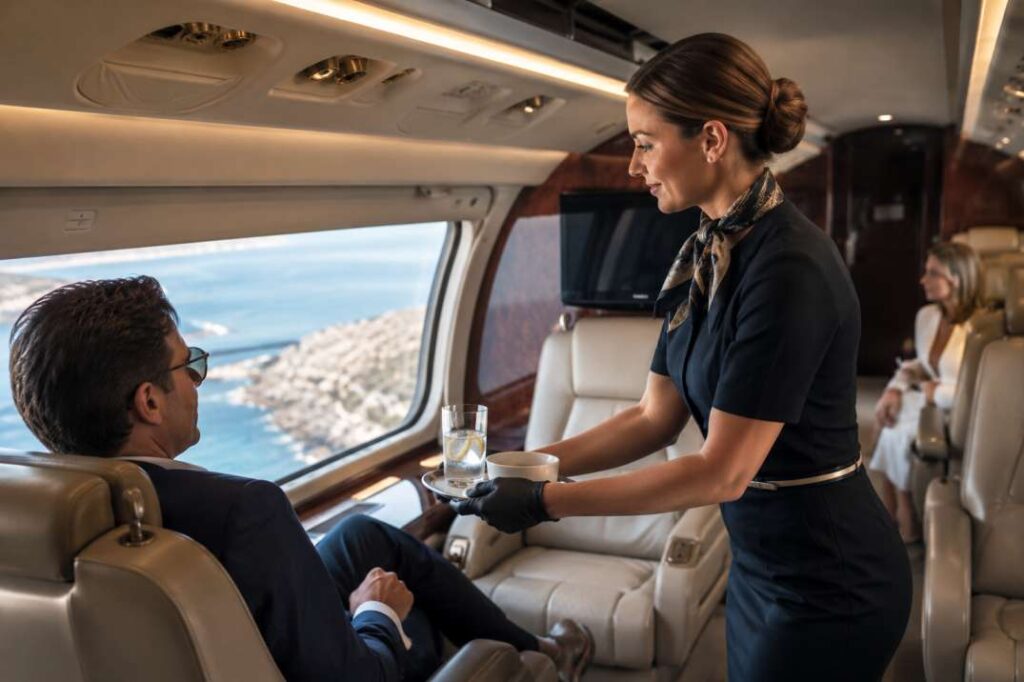
- Expect strong hospitality and service skills, similar to private‑jet or luxury‑ground transport.
- Plan for curated catering, beverages, and special‑request handling.
- Emphasize professionalism, grooming, and presentation on every short‑notice flight.
- Treat cabin crew as an extension of the ground‑handling and concierge team.
Service quality matters even when the flight is only minutes long.
4. Aircraft and Venue Familiarity
Helicopter operations move through complex environments.
Flight departments should:
- Ensure crew understand the specific helicopter type and cabin layout.
- Confirm familiarity with key helipads, rooftops, and high‑security venues.
- Train crew on quick‑turnaround and back‑to‑back trip logistics.
- Emphasize coordination with handlers, security, and drivers at each stop.
The ground environment is as important as the cabin.
5. Duty‑Time, Fatigue, and Workload
Short but frequent helicopter trips can still create fatigue.
Flight departments should:
- Define clear duty‑time expectations even for short‑haul or ad‑hoc legs.
- Consider cumulative workload across multiple rapid‑fire trips.
- Set rest and positioning expectations for heliport‑ or rooftop‑based operations.
- Encourage crew to report fatigue and workload concerns.
Helicopter‑specific fatigue risks must be managed like any other business‑aviation role.
6. Regulatory and Insurance Alignment
Business‑aviation standards apply even in the rotorcraft world.
Flight departments should:
- Treat VIP helicopter cabin crew as safety‑qualified where appropriate.
- Confirm training and recurrent checks meet operator, regulatory, and insurance requirements.
- Document all training and qualifications in a central system.
- Clearly define the role as safety‑focused, service‑focused, or hybrid in the SOPs.
Clarity and compliance protect the operator in audits and reviews.
7. SOPs, Briefings, and Integration with the Flight Deck
VIP helicopter cabins must operate as one team.
Flight departments should:
- Develop one SOP for VIP helicopter operations that includes cabin and flight‑deck teams.
- Require joint briefings for security, routing, and client‑specific instructions.
- Standardize communication, sterile‑helicopter expectations, and security checks.
- Include cabin crew in training and drills with the pilots and ground team.
Integration is what separates a polished operation from a fragmented one.
8. Why Working With a Staffing Partner Helps
Finding helicopter‑specific cabin crew with a business‑aviation mindset can be difficult.
Flight Crew International (FCI) helps business aviation operators by:
- Connecting operators to vetted cabin crew familiar with high‑end rotorcraft environments.
- Providing pre‑screened crew who meet safety, training, and service requirements.
- Matching crew profiles to the operator’s VIP, corporate, or charter model.
- Offering flexible staffing that supports short‑notice and project‑based helicopter work.
9. How CrewLocator Supports VIP Helicopter Crew Planning
Technology can help operators see who is ready for this demanding environment.
CrewLocator allows operators to:
- Identify cabin crew with experience in business‑aviation or VIP‑transport roles.
- Filter by recurrent‑training status, medicals, and availability near key heliport bases.
- Reduce time spent searching for crew who can handle VIP helicopter missions.
- Track crew readiness and qualifications for mission‑critical trips.
The platform can be accessed at Crewlocator, with mobile access via the Android app here and the iOS app here.
Building a True Business‑Aviation Cabin‑Crew Culture
For VIP helicopter operations, cabin crew set the tone for the entire mission. By combining safety training, hospitality, discretion, and tight SOPs, operators can match the helicopter cabin to the same standards their fixed‑wing business‑aviation clients expect.
When supported by structured staffing partners and modern tools, operators can run VIP helicopter missions with the same professionalism as a long‑range business‑jet operation.
FAQs
They combine rotorcraft‑specific safety with high‑end hospitality, discretion, and security expectations.
Yes. They should have emergency‑procedure, first‑aid, and aircraft‑specific training aligned with the operation.
Very important. Clients often expect the same privacy as on private jets or secure ground transport.
Only if the operator accepts lower safety and compliance expectations; most VIP operations prefer safety‑qualified cabin crew.
They integrate cabin crew into the flight‑deck and ground teams, standardize safety, and define client‑service expectations.
By using vetted pools, staffing partners, and tools like CrewLocator to identify trained, recurrent‑qualified crew.
Flight Crew International provides vetted, compliant cabin crew experienced with business‑aviation environments and can support helicopter‑focused operations. Contact can be made at https://www.fci.aero/contact.