What to Do When You Have a Pilot Shortage in Business Aviation
Pilot shortages are no longer an occasional inconvenience in business aviation. In 2025, they are a reality that many flight departments, charter operators, and private jet owners face on a regular basis.
Whether the issue is sudden sick leave, training gaps, resignations, or aircraft expansion, a shortage of qualified pilots can quickly disrupt schedules, increase costs, and put pressure on operational teams. Knowing how to respond early and effectively is critical to keeping flights moving safely and on time.
This article outlines practical steps business aviation operators can take when facing a pilot shortage, and how specialist staffing partners like Flight Crew International can help reduce risk and downtime.
Assess the Impact and Urgency of the Shortage
The first step is understanding how serious the shortage is and how quickly it needs to be resolved.
Key questions to ask include:
- Is the shortage affecting one trip or multiple upcoming flights
- Is it limited to a specific aircraft type
- Is the gap temporary or likely to continue
- Are compliance, duty time, or fatigue limits at risk
Short-term gaps caused by illness, vacation, or training often require immediate solutions, while longer-term shortages may need a more structured staffing approach. Acting early gives you more options and prevents last-minute operational pressure.
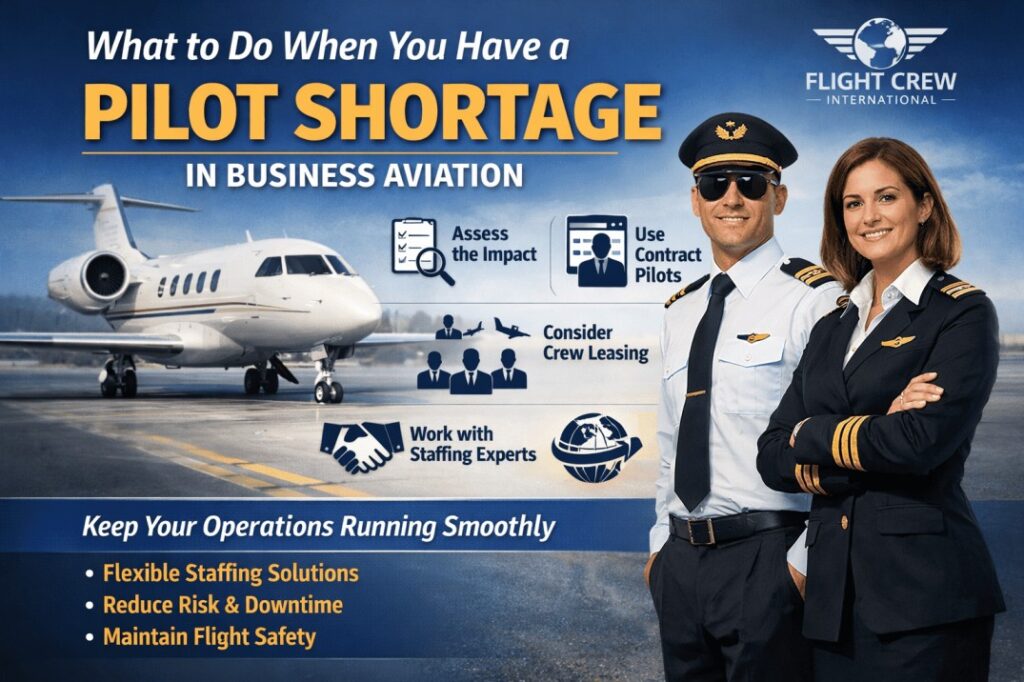
Use Contract Pilots for Immediate Coverage
For many business aviation operators, contract pilots are the fastest and most effective way to address short-term shortages.
Contract pilots can provide:
- Immediate coverage for scheduled trips
- Support during peak seasons
- Temporary replacement during training or leave
- Flexibility without long-term employment commitments
Working with a specialist aviation staffing company ensures pilots are properly vetted, current, and compliant with regulatory requirements.
Consider Crew Leasing for Ongoing Gaps
If pilot shortages are recurring or linked to growth, crew leasing may be a better solution than repeated short-term fixes.
Crew leasing allows operators to:
- Maintain stable operations without permanent hiring
- Scale crew numbers up or down based on demand
- Reduce administrative and recruitment workload
- Access a wider pool of international talent
This model is particularly useful during fleet expansion, new aircraft deliveries, or base openings.
Work With an Aviation-Specific Staffing Partner
Generic recruitment methods often fall short in business aviation due to the complexity of aircraft types, operational standards, and compliance requirements.
Flight Crew International specializes exclusively in aviation staffing, supporting business jet operators with:
- Access to a global pool of experienced pilots
- Aircraft-specific sourcing
- Compliance and document verification
- Rapid deployment timelines
- Long-term staffing strategy support
Rather than reacting to each shortage individually, working with a trusted partner helps build a more resilient crew strategy.
Plan Ahead to Reduce Future Shortages
While some shortages are unavoidable, many can be reduced with better planning.
Effective steps include:
- Maintaining a backup crew strategy
- Tracking training and currency cycles
- Forecasting leave and retirement timelines
- Keeping relationships active with contract pilots
- Using flexible staffing models alongside core crew
Proactive planning reduces disruption and gives flight departments greater control during high-demand periods.
Staying Operational When Crew Availability Is Tight
Pilot shortages are becoming more common across business aviation, but they do not have to lead to cancelled trips or operational stress.
By acting early, protecting existing crew, and using flexible staffing solutions such as contract pilots and crew leasing, operators can maintain safe and reliable operations.
Flight Crew International continues to support business aviation operators worldwide with practical, compliant, and scalable pilot staffing solutions.
Because in business aviation, having the right crew available at the right time makes all the difference.