How AI Is Changing Cabin Crew Recruitment for Business Aviation
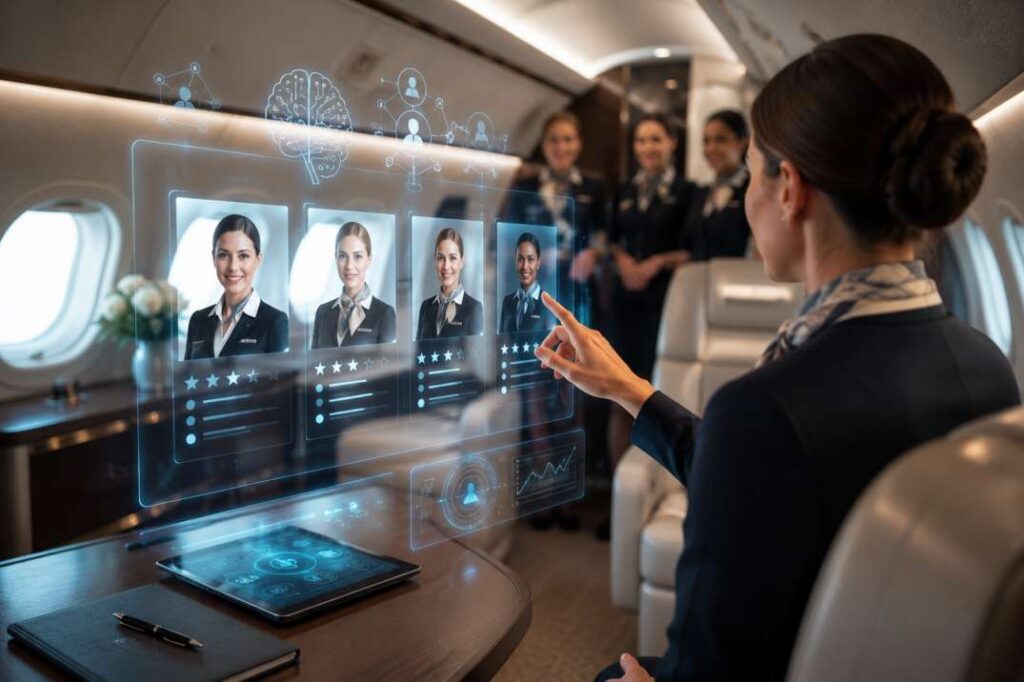
In 2026, artificial intelligence is reshaping how flight departments and operators find, screen, and hire cabin crew. AI is not replacing human judgment; it is speeding up screening, improving match quality, and making it easier to handle large volumes of candidates while keeping the human element in final decisions.
This guide explains how AI is changing cabin crew recruitment for business aviation, using the same short‑bullet‑point style you have been using.
1. Faster Candidate Screening and Shortlisting
AI speeds up the first step: sorting through applicants.
Recruiters and operators now use AI to:
- Scan hundreds of CVs quickly for key skills and experience.
- Filter for cabin‑safety training, first‑aid, and recurrent checks.
- Flag candidates who match aircraft type and service level.
- Reduce manual time spent on initial screening.
This means qualified candidates move forward faster.
2. Automated Matching to Operator Needs
AI can match candidates to specific operator requirements.
AI systems now:
- Compare candidate profiles against aircraft type and cabin size.
- Match service level (luxury, VIP, corporate) to operator expectations.
- Factor in language skills, availability, and location.
- Suggest top matches rather than forcing manual comparison.
This improves the quality of shortlists.
3. Better Data on Training and Compliance
AI helps keep training and compliance records accurate.
Operators can use AI to:
- Track training, recurrent checks, and medical expiry dates.
- Alert operators when a crew member is due for recertification.
- Centralize documentation for audits and insurance reviews.
- Reduce errors from manual record‑keeping.
Compliance becomes more reliable and easier to prove.
4. Improved Visibility of Available Crew
AI tools give operators a clearer picture of crew availability.
Platforms powered by AI can:
- Show who is available, where they are, and when they can start.
- Highlight crew with large‑cabin or VIP experience.
- Update availability in real time as trips change.
- Support both permanent and contract crew in one view.
This is especially useful in a tight staffing market.
5. Enhanced Interview and Assessment Tools
AI supports, but does not replace, human interviews.
Recruiters now use AI to:
- Analyze video interviews for communication and presence.
- Flag candidates who may struggle with service or discretion.
- Provide structured feedback to support human judgment.
- Reduce unconscious bias through standardized scoring.
Human recruiters still make the final hiring decision.
6. Support for Mobile and Instant Applications
Candidates in aviation are often on the move.
AI‑enabled systems now:
- Offer mobile‑friendly, quick application processes.
- Allow candidates to apply and track status from their phone.
- Provide instant confirmations and updates.
- Improve the user experience for busy aviation professionals.
Faster, smoother applications attract more qualified candidates.
7. Human‑Led Vetting Remains Essential
AI does not replace rigorous vetting in business aviation.
Operators should:
- Keep human‑led background checks and reference calls.
- Verify safety training, medicals, and experience manually.
- Ensure confidentiality and privacy rules are followed.
- Use AI as a tool, not the final decision maker.
The “human element” is still the most important part of specialized staffing.
8. Impact on Time‑to‑Hire and Quality of Hire
AI changes both speed and quality in recruitment.
Flight departments can expect:
- Shorter time from posting to first shortlist.
- Better matches between candidates and operator needs.
- Fewer bad hires due to improved screening and data.
- More time for recruiters to focus on culture and fit.
Recruitment becomes more efficient and strategic.
9. Why Staffing Partners Use AI to Improve Service
Staffing partners are integrating AI into their recruitment process.
Flight Crew International (FCI) uses technology to:
- Speed up candidate screening and initial matching.
- Maintain a larger, better‑tracked pool of vetted cabin crew.
- Match crew to aircraft type, service level, and compliance needs.
- Reduce time‑to‑deploy for private‑jet operators.
10. How Crewlocator Uses AI‑Style Tools for Crew Matching
Platforms like Crewlocator bring AI‑like capabilities to operator use.
Crewllocator helps operators by:
- Identifying available, trained cabin crew near the aircraft.
- Filtering by experience, training status, and location.
- Reducing time spent manually searching for crew.
- Providing visibility into crew readiness for missions.
AI as a Support Tool, Not a Replacement
AI is changing cabin crew recruitment by making it faster, more data‑driven, and more scalable. However, cabin crew roles still depend on human presence, empathy, and judgment qualities AI cannot replicate.
The best approach in 2026 is AI‑assisted screening paired with human‑led vetting and final decisions.
FAQs
No. AI can screen and match, but human recruiters must verify training, experience, and fit.
It automates CV screening, matches candidates faster, and tracks training and availability.
Yes. Better data and matching reduce bad hires and improve fit with operator needs.
AI can flag and organize data, but background checks and references remain human‑led.
Yes. Even small operators can use staffing partners and platforms that use AI for screening and matching.
It provides visibility into trained, available crew and reduces manual search time.
Flight Crew International uses AI‑assisted screening while keeping human vetting central. Contact can be made at https://www.fci.aero/contact.